 11
11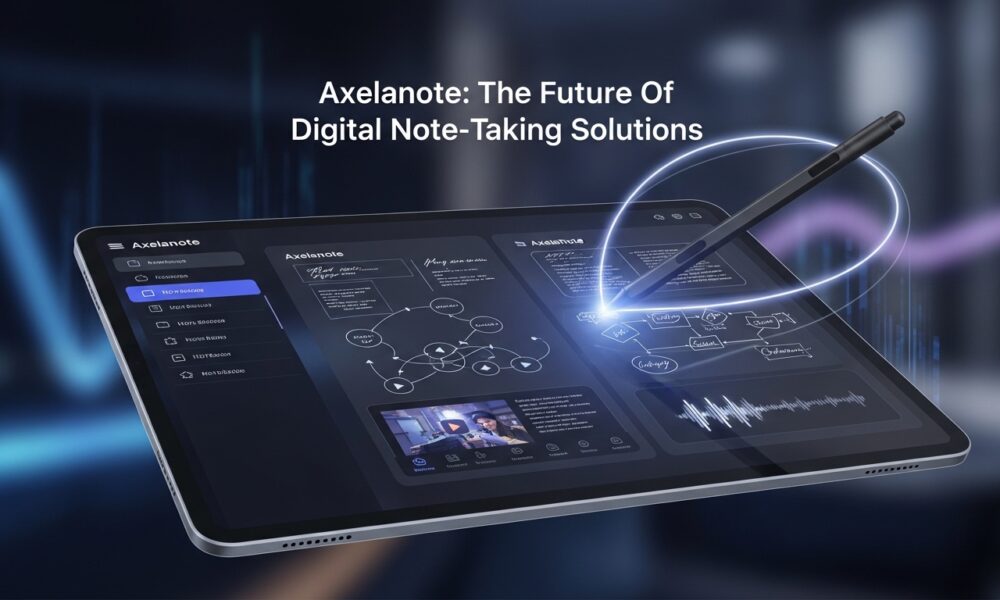
In today’s world, digital documents, remote collaboration, and information workflows are everywhere. Traditional tools for handling PDFs, research materials, or reports often fall short when it comes to flexibility, security, and collaboration. Axelanote is a modern software solution that addresses these challenges. It combines advanced annotation capabilities with a knowledge management system that transforms how individuals and organizations interact with digital files.
Whether you are reviewing a report, marking up architectural plans, organizing research notes, or collaborating on legal documents, Axelanote provides tools that go beyond simple PDF readers or standard note-taking apps.
Axelanote is a versatile digital platform that serves multiple purposes:
This combination of annotation and organization sets Axelanote apart from typical PDF editors or simple note-taking applications. It is designed for professionals, students, and organizations that need to manage complex digital information efficiently and securely.
Axelanote was developed by a technology company focused on improving digital workflows and productivity. The software was created to allow users to annotate and collaborate on digital documents without compromising the integrity of the original content.
Unlike traditional PDF editors, Axelanote does not make permanent changes to files. Instead, it creates a separate overlay layer for annotations. This means the original document remains unchanged while the annotations are stored in a separate file. This unique approach is particularly useful for documents that are sensitive, legally binding, or protected against editing.
The main technical feature of Axelanote is its non-destructive annotation layer. When a user marks up a document, those changes are saved in a separate file rather than being embedded into the PDF.
This system has several advantages:
Annotations can later be merged with the PDF for sharing or printing, while the original file continues to remain intact.
Axelanote primarily supports Windows operating systems and works well with devices that have pen or touch capabilities. It integrates easily with common PDF readers, allowing users to view the document and annotate simultaneously.
While the software is optimized for Windows, it can also be used on other operating systems via virtual machines, though native support for Mac or Linux is limited.
Axelanote offers a range of features designed to enhance productivity and collaboration:
Users can:
Axelanote allows annotations on PDFs that restrict editing, copying, or commenting. This feature is particularly valuable in legal, administrative, or educational settings where document integrity must be maintained.
Unlike many cloud-based annotation tools, Axelanote stores files locally, providing better security and privacy. Sensitive documents can be annotated without uploading them to external servers, reducing the risk of leaks.
Axelanote is often used alongside companion utilities that allow:
These integrations make Axelanote a versatile solution for professional environments.
Axelanote is useful in many professional, academic, and technical settings.
Students and teachers can annotate textbooks, lecture slides, research papers, and other materials without altering the original documents. Notes can be organized across projects, courses, and semesters, making study and review more efficient.
Business professionals often deal with contracts, reports, technical manuals, and compliance documents. Axelanote allows them to annotate, comment, and collaborate without breaking security restrictions or risking document corruption.
Engineering and construction professionals use PDFs for blueprints and design plans. Axelanote allows team members to mark up plans digitally, reducing the need for paper copies and accelerating review cycles. Multiple reviewers can annotate the same plans simultaneously without altering the original files.
Public agencies and local governments often rely on digital workflows for forms, proposals, and applications. Axelanote provides a way to annotate, approve, and share documents without printing them, supporting efficient digital transformation and reducing paper usage.
Axelanote accelerates document review and annotation. By allowing secure, non-destructive markup, users can focus on the content rather than managing file restrictions.
Since annotations are stored separately, the original PDF remains untouched. This is critical for legal documents, official reports, and sensitive research materials.
Multiple users can annotate the same document independently. Annotations can be compared or merged later, enabling smooth collaborative workflows without confusion over multiple document versions.
By operating offline and storing annotations locally, Axelanote reduces risks associated with cloud storage. Sensitive information remains under the user’s control.
No software is perfect, and Axelanote does have some limitations:
Despite these challenges, Axelanote remains a strong solution for professionals and students who need secure and flexible annotation capabilities.
As organizations increasingly rely on digital workflows and remote collaboration, the need for tools like Axelanote is growing. Future developments could include:
These improvements would further cement Axelanote’s place as a central tool for digital productivity.
Axelanote is more than just a PDF annotation tool. It represents a new way of interacting with digital content: preserving original documents, enhancing productivity, supporting secure collaboration, and organizing knowledge efficiently.
For educators, students, professionals, and organizations handling sensitive information, Axelanote provides a reliable, flexible, and secure solution for working with PDFs and notes. Its non-destructive annotation system, combined with offline operation and robust tools, makes it a forward-looking solution for the demands of the modern digital workplace.
By balancing innovation with practical usability, Axelanote is setting a standard for digital annotation and knowledge management in the 21st century.
More information